Hip Mobility: The Top 5 Stretches for Back Pain
Back pain is one of the most common health complaints in modern life, yet it is often misunderstood. Many people assume the lower back is the root cause, but in many cases it is simply where pain shows up when deeper movement dysfunctions exist in the body. If you are dealing with persistent discomfort, your lower back pain may be caused by muscular imbalances, poor core strength, or limited mobility in other areas.
Understanding the Real Cause of Lower Back Pain
Lower back pain rarely exists in isolation. It is often a symptom of weakness or tightness throughout the body. Weak core muscles and an underdeveloped posterior chain, especially the glutes and hamstrings, are common contributors to lower back pain. At the same time, tight hip flexors, iliopsoas muscles, and inner and outer hip muscles such as the adductors and abductors can pull the pelvis out of alignment and place added stress on the lumbar spine.
This imbalance between strength and mobility creates a cycle where the lower back compensates for other areas that are not functioning properly, which can lead to chronic lower back pain and reduced movement quality.
Why You Should Not Just Treat the Pain
Effective lower back pain relief requires addressing the root cause rather than only treating symptoms. It can be difficult to identify the exact cause of back pain without an assessment from a certified physical therapist, but there are still practical steps you can take to improve your condition.
A well-rounded fitness program that includes strength training and mobility work is one of the most effective ways to reduce lower back pain and prevent future issues. Instead of isolating the lower back, focus on a full-body approach that includes:
Strengthening the core
Strengthening the posterior chain
Improving hip mobility and flexibility
This approach helps reduce strain on the lower back and supports long-term back pain relief. While strength training is important, improving hip mobility can often provide immediate benefits for people experiencing back pain.
The Role of Hip Mobility in Back Pain Relief
Hip mobility plays a critical role in spinal health and overall movement. The hips are a multi-directional joint that allows motion in several planes. When hip mobility is limited, the lower back often compensates, which can increase pain and stiffness.
True hip mobility involves more than just the femur moving within the hip socket. It also includes how the pelvis moves and interacts with the spine, particularly at the sacroiliac joint. Although the sacroiliac joint does not move significantly in a healthy body, improving mobility around this area can help reduce both acute and chronic lower back pain.
When choosing hip mobility exercises, it is important to consider both femur movement and pelvic control. The following five hip mobility exercises are designed to improve range of motion, reduce muscle tension, and counteract the negative effects of prolonged sitting. Incorporating these exercises into your routine can help relieve lower back pain, improve flexibility, and support long-term movement health.
Bench Assisted Pigeon Pose
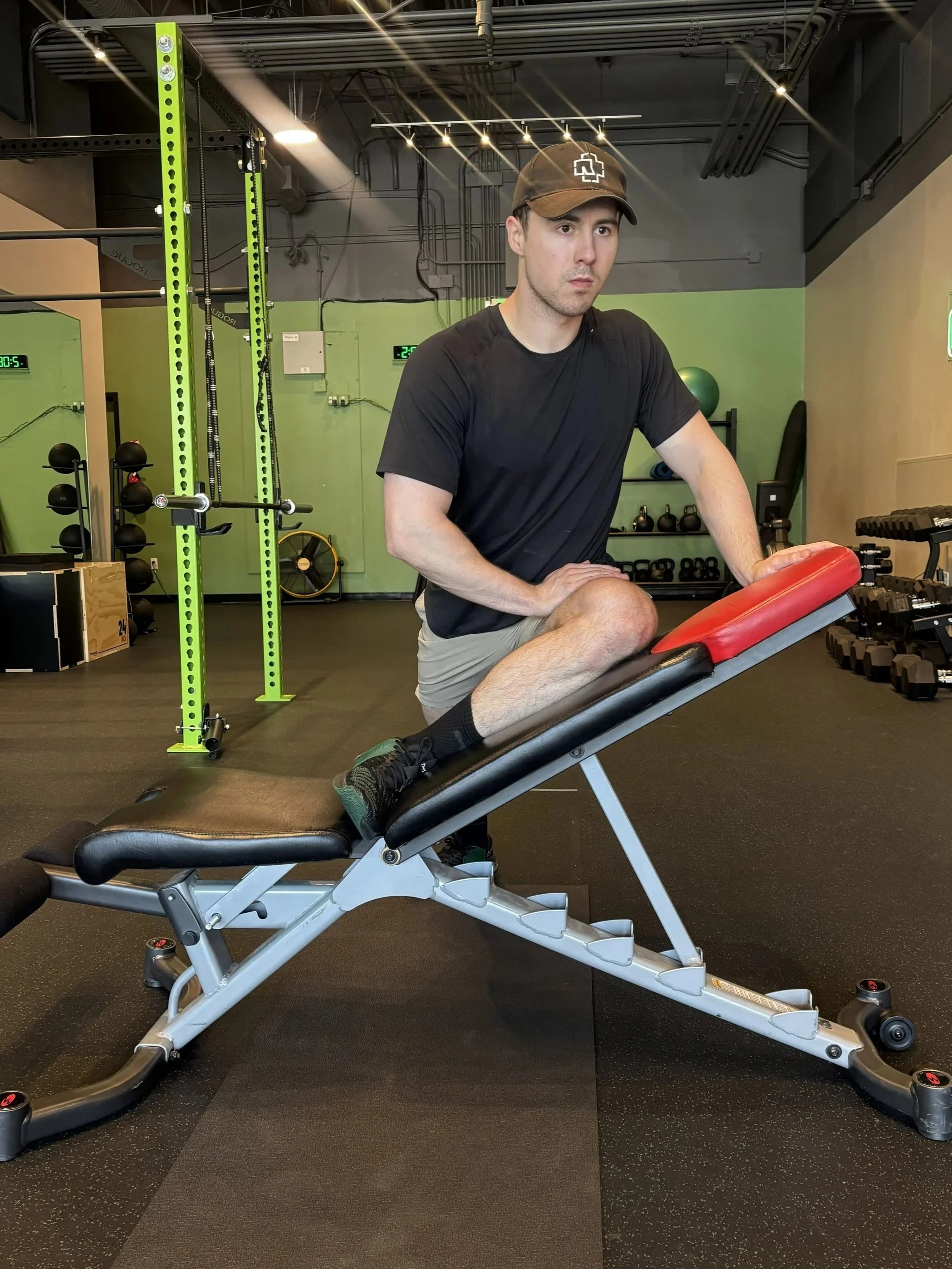
The Bench Assisted Pigeon Pose is a great alternate to the pigeon pose on the floor.
Using an angled bench, start with a fairly high angle and drape one leg across like shown. Leaning forward in this position is a great stretch for the outside of the hip. Advance the stretch by lowering the bench closer to flat.
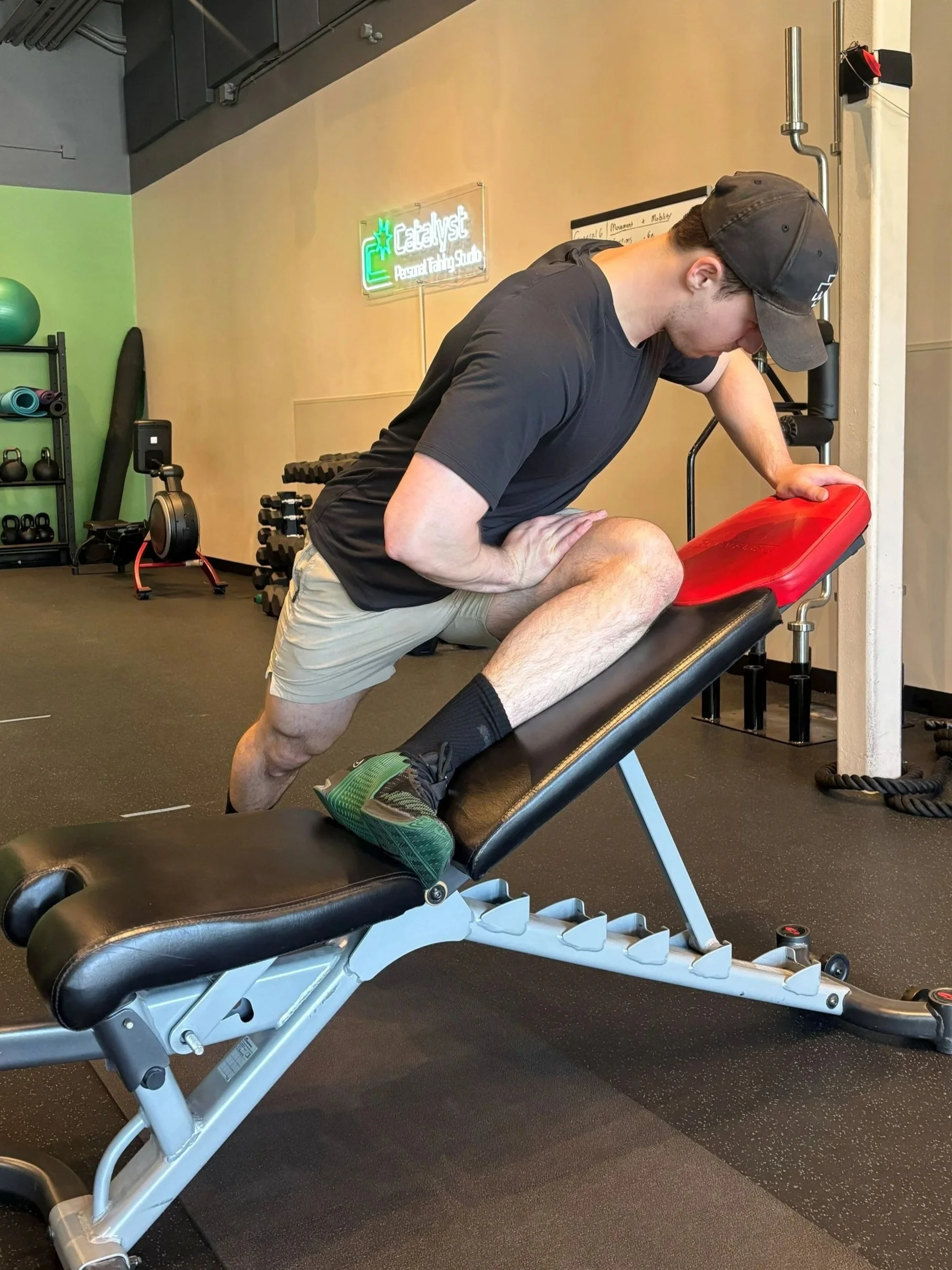
Can be deepened with a forward lean and a twist towards the outside. Hold the stretch for up to 30 seconds
2. Hip Peels
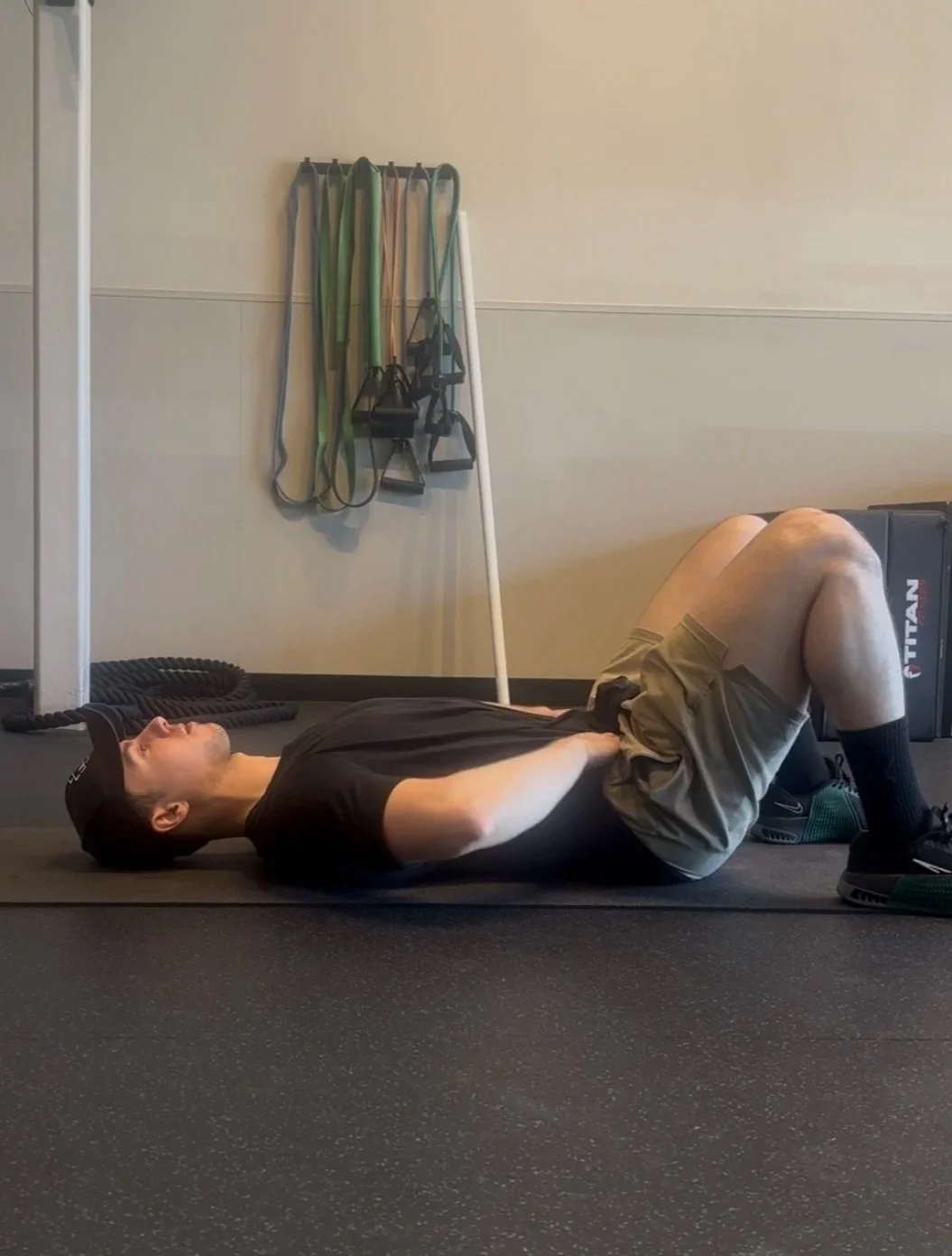
Start by laying on the floor and ensuring your lumbar spine is totally flat to the ground. Activate the core by bringing the ribs down and into the body
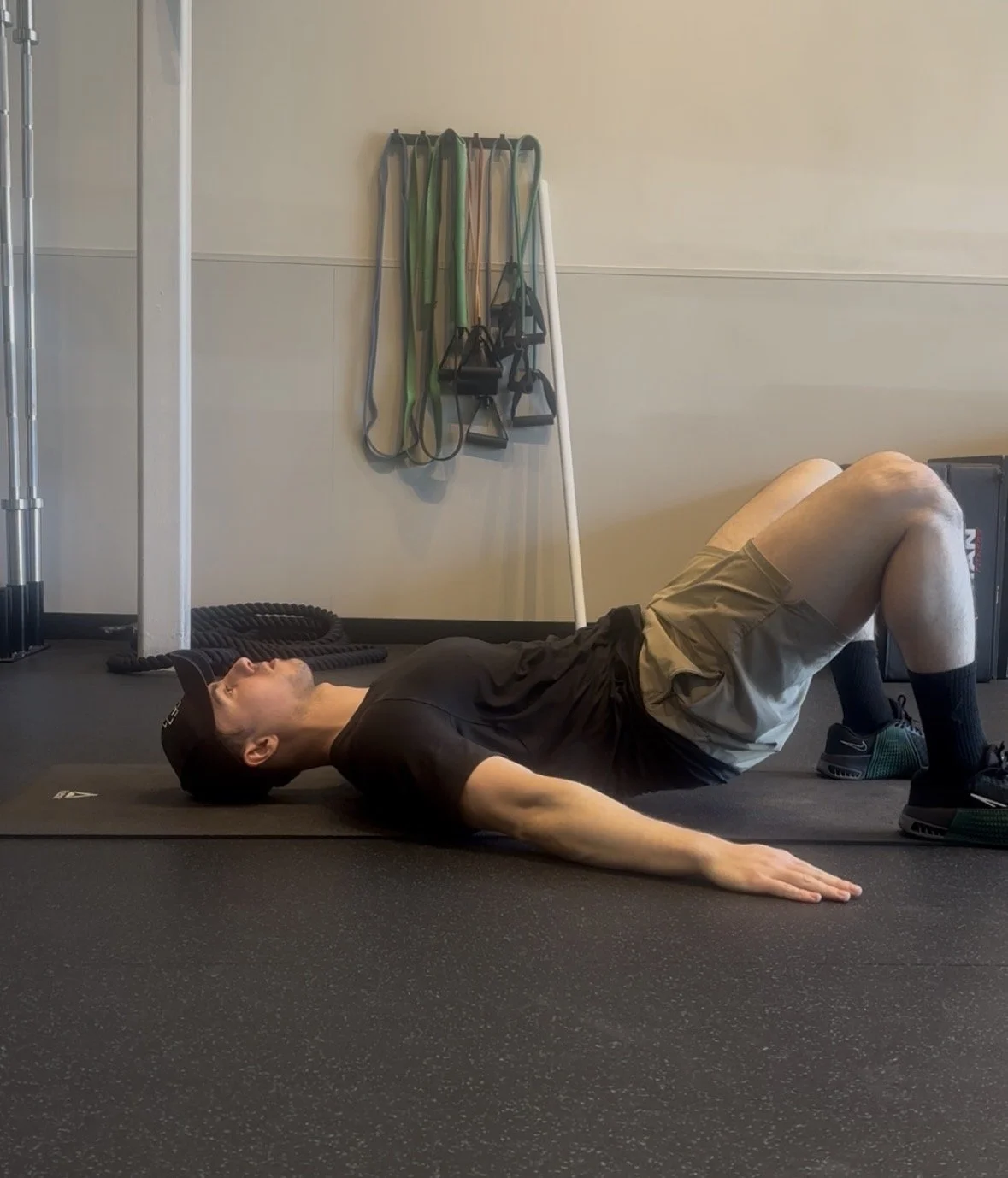
Keeping upper back and as much of the lumbar spine on the floor as possible, “tilt” your pelvis up like your scooping your bottom underneath you.
You should be using your core to help keep the spine on the ground while just the pelvis and sacrum lift. Set down and repeat 10-20 times
3. Runner’s Stretch/Couch Stretch
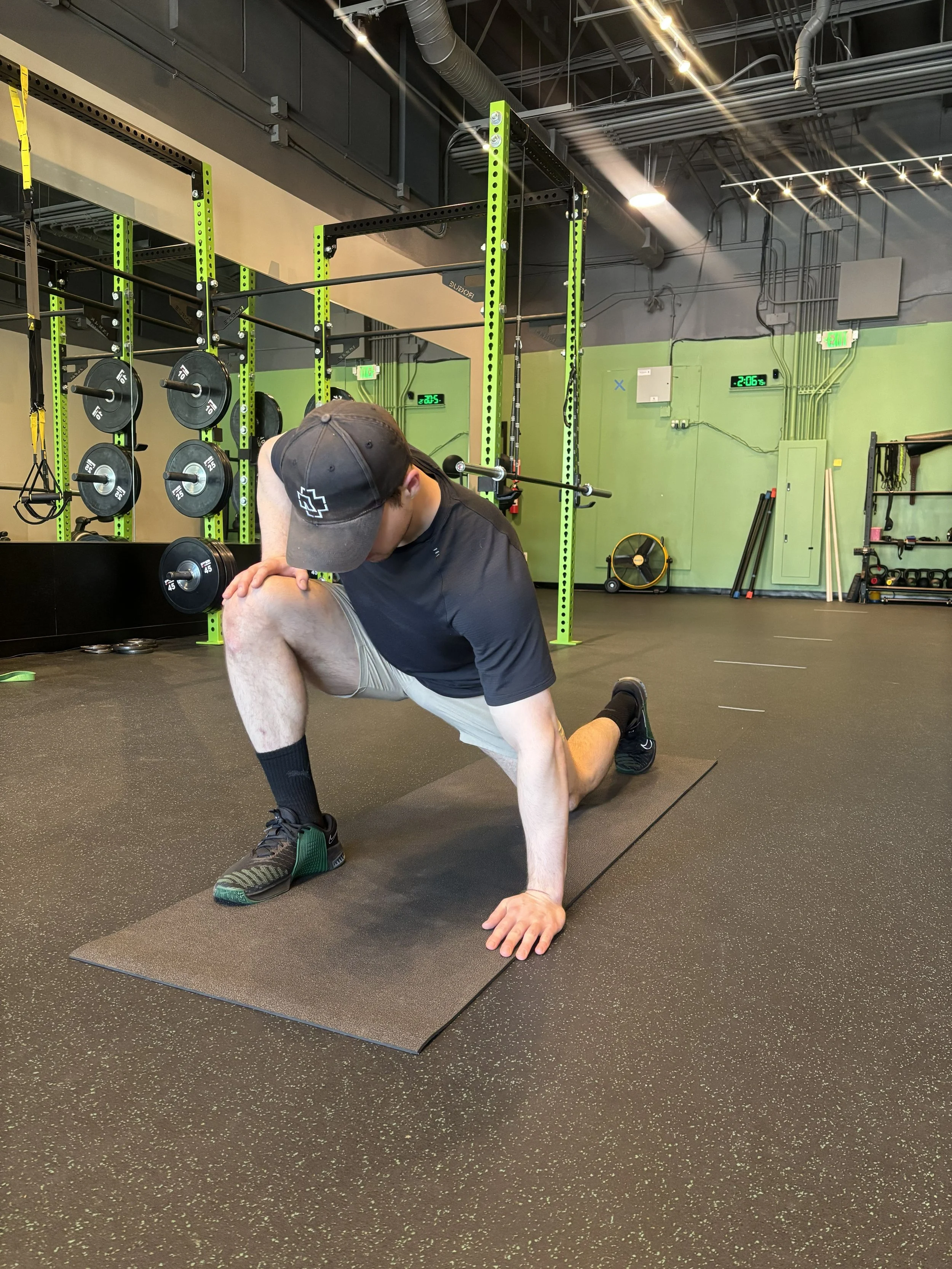
The Runner’s stretch is a great stretch for the hip flexors. Hip flexors are a lead cause of pain in the back and are a great spot to target.
Start by doing a half kneel on the floor and slowly work your rear leg back until you feel the stretch in the front of the hip
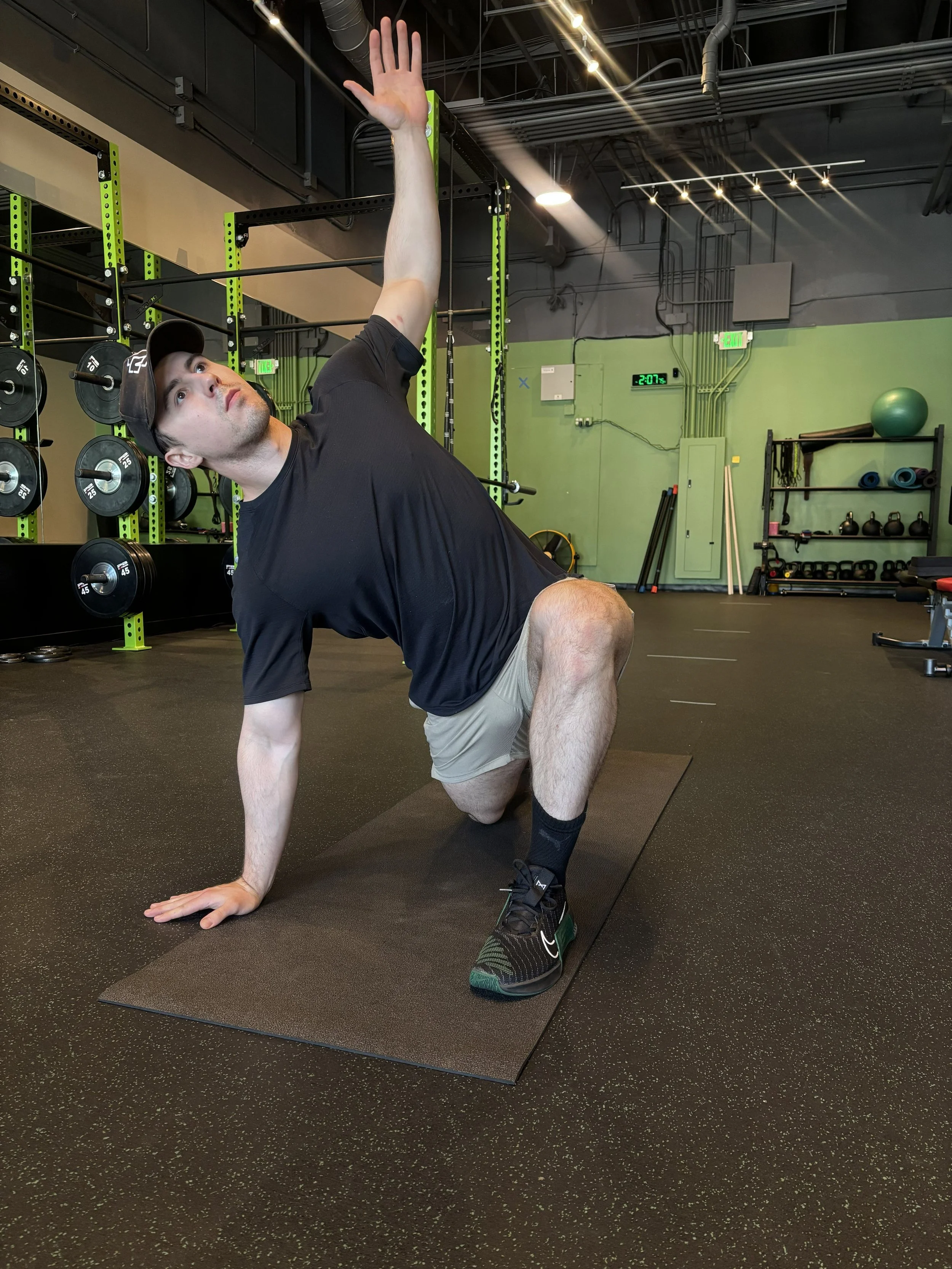
Enhance the stretch by planting your outside hand and twisting your torso open towards your leg
Squeezing the glute and driving the hips down can deepen the stretch in the hip flexors. Hold for up to 30 seconds
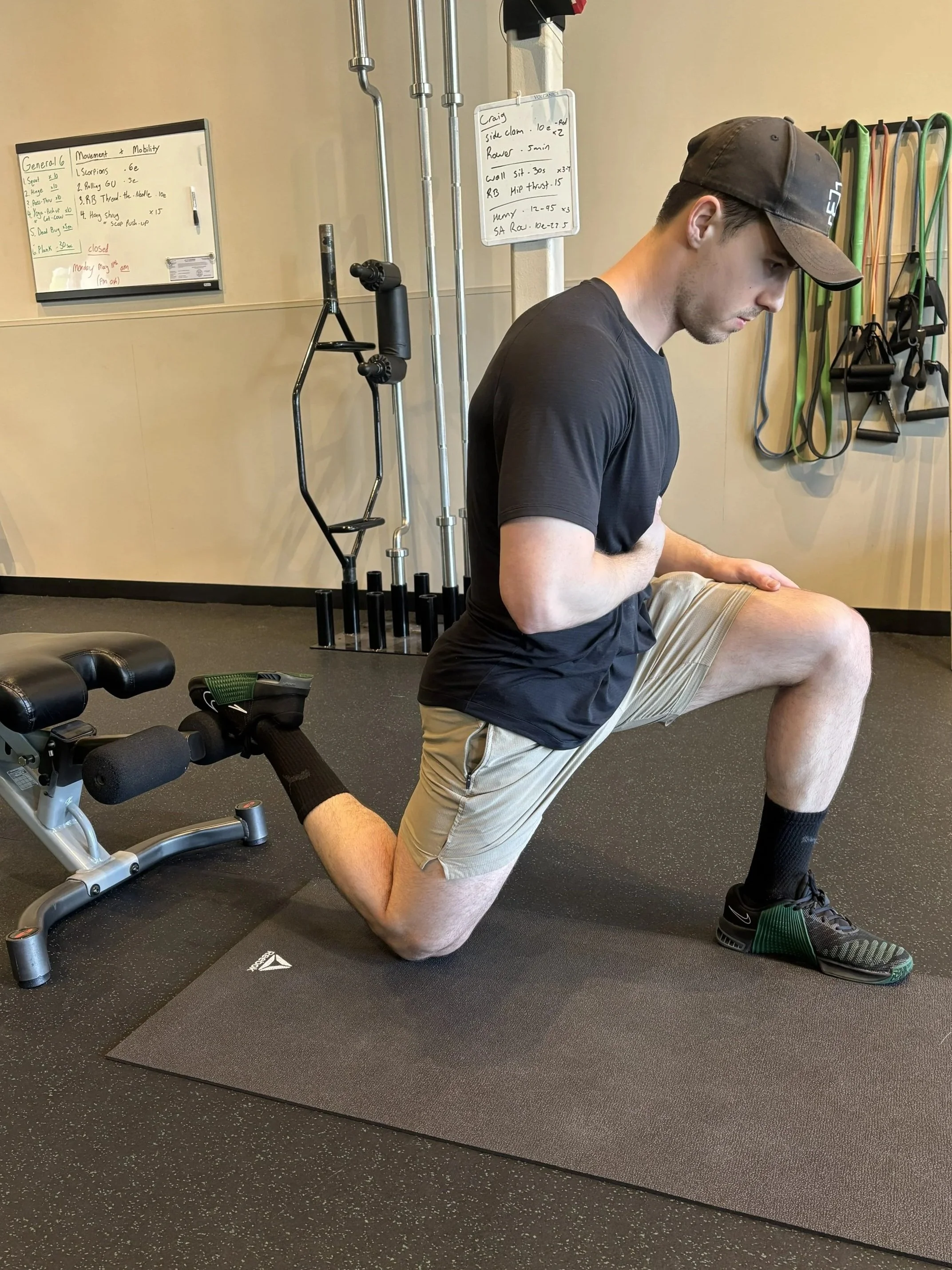
The Couch Stretch is a variation of the Runner’s Stretch
The position is very similar but requires you to place your rear foot on an elevated surface (like a couch or chair). This will help target the quads in the stretch as well.
4. Hamstring PAILS/RAILS
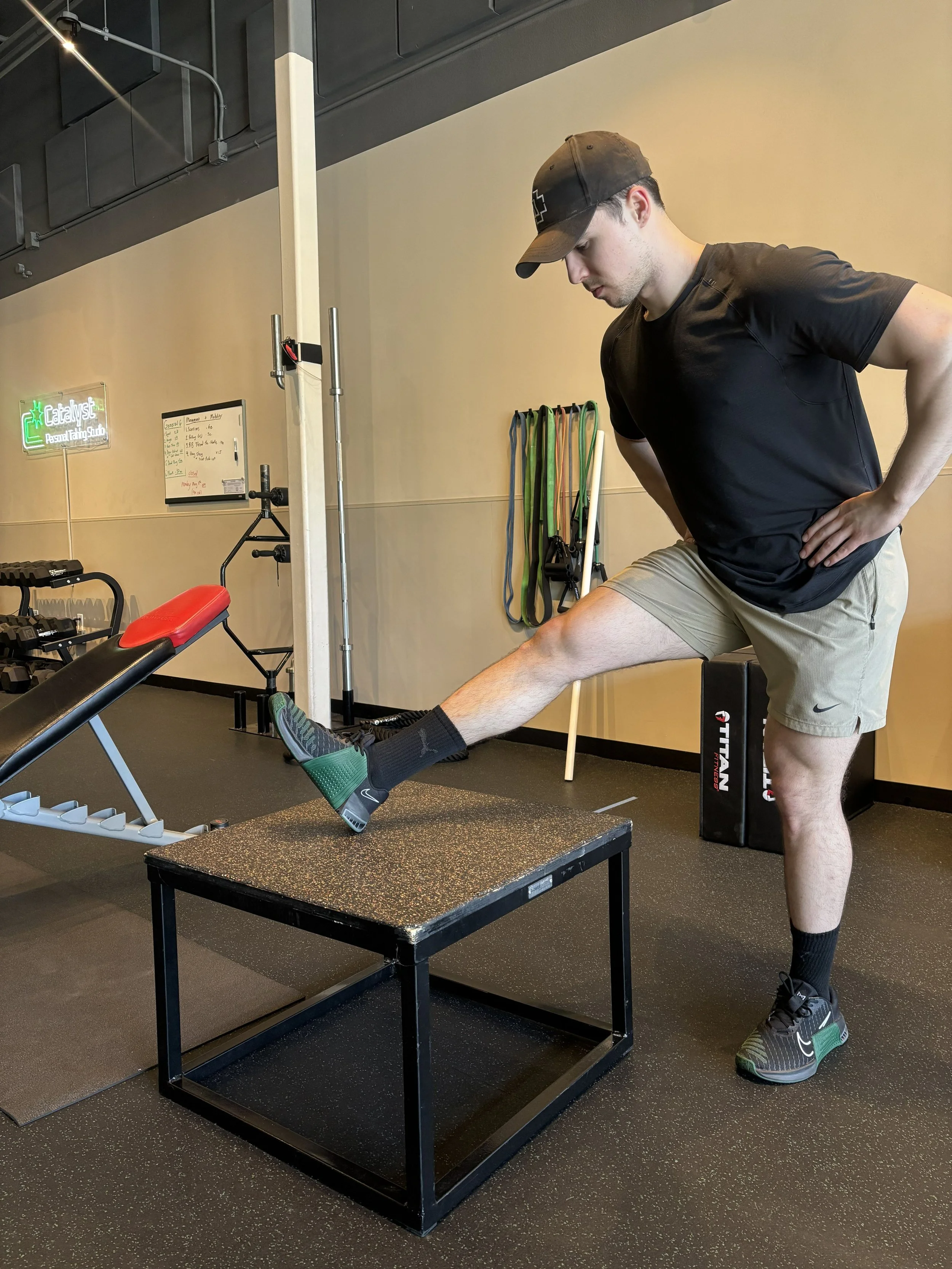
PAILS and RAILS are a stretching technique that improves the end range flexibility of a joint. It Involves a stretch followed by a short contraction of the stretching muscle into another, deeper stretch.
Start by placing one leg up on a elevated surface, such as a chair or box, and leaning forward until you feel a stretch in the back of the leg, hold for 30s
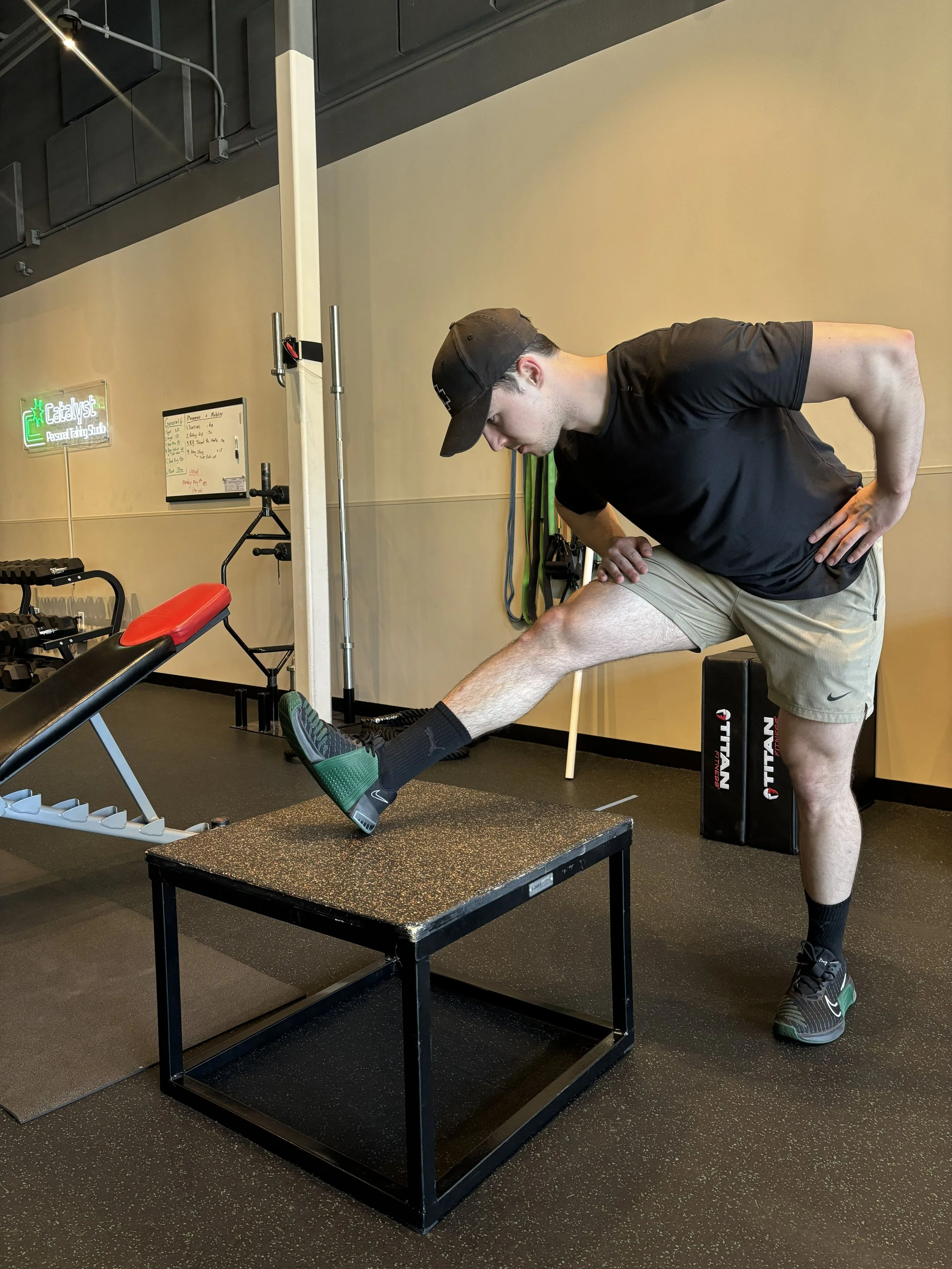
Following the initial stretch, engage the hamstrings by driving the heel down into the box for a few seconds.
After the muscle engagement, relax and push yourself deeper into the stretch, you should be able to stretch slightly further than before. Repeat 2 more times.
5. Scorpions
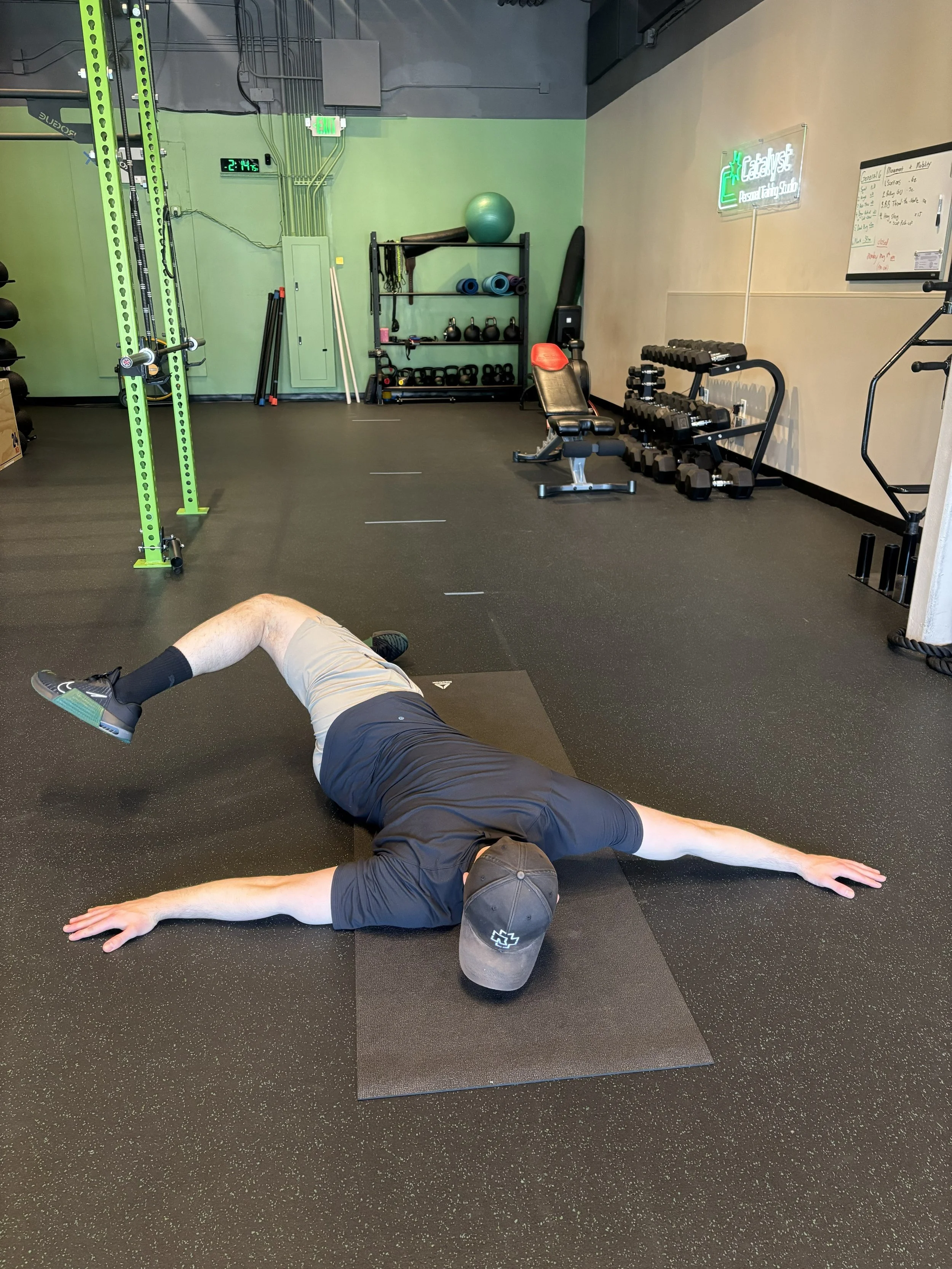
Lying flat on your belly, bend one knee and pull the leg across the body letting the hips twist off the floor
Keep the chest and shoulders on the floor as much as possible, holding the twist for a few seconds.
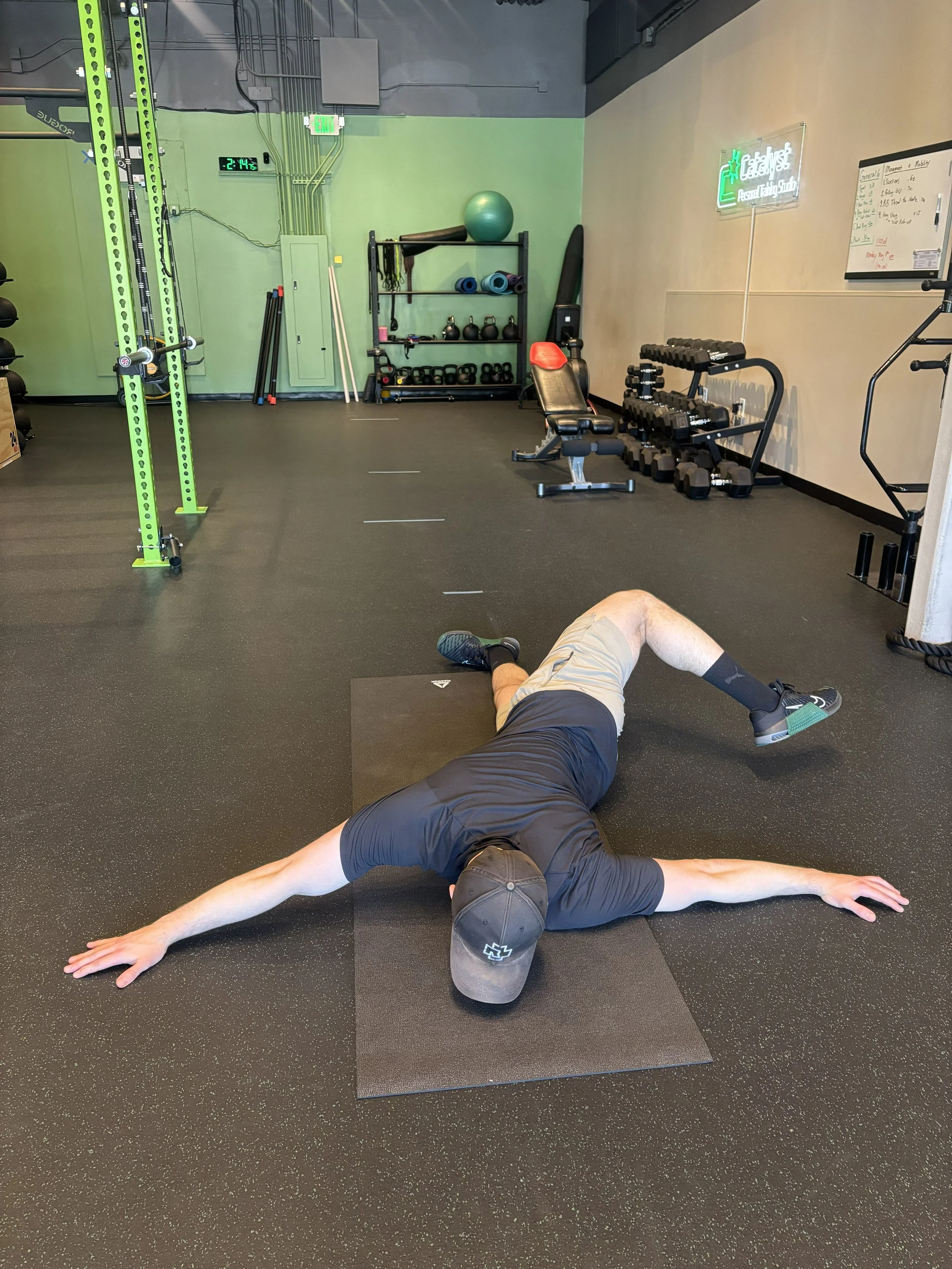
Repeat on the other side
To deepen the stretch, exhale completely at the end range of the stretch. Additionally, you can reach away from the twisting leg with the opposing arm to add to the intensity. Perform 6-10 per side
Ready to put this into action? At Catalyst, our personal trainers in Oceanside work with adults who are ready to build strength, lose weight, and move without pain. Your first session is completely free! No commitment, no pressure. 👉 Book your free intro session today at catalystoceanside.com/sign-up